Case Study: Multi-Phase Post-Construction Cleaning for an Apartment Building in New Hampshire

Updated: Oct 8
Summary: CC Smart Maintenance completed a 3-phase post-construction clean of a newly built boutique apartment building in New Hampshire. The building is about 55,500 square feet. Our in-house crew made five separate visits over 14 days and timed each one around the painters' and electricians' punch-list work. We cleaned high-end finishes like quartz countertops, soft-close cabinetry, LVP flooring, and tile without abrasives. Before handover, we did a white-glove walkthrough of every unit and common hallway, and then the building went to property management ready for move-in.
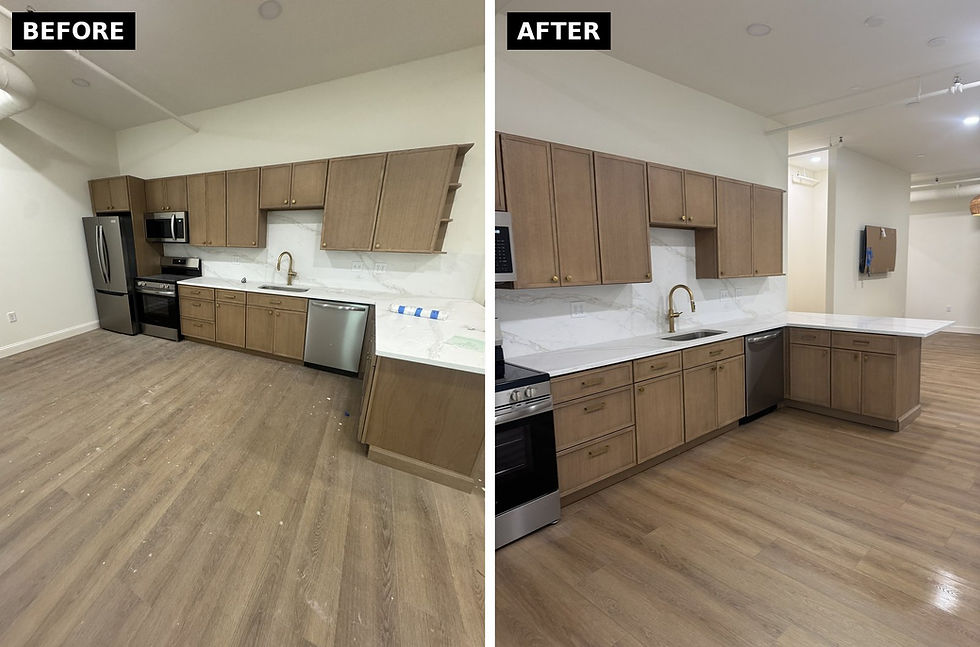
Kitchen before and after: drywall debris on the LVP floor and tape on the quartz counter at the start of the job, then the finished kitchen at handover.
Project at a Glance
Project type | Multifamily new construction: boutique mid-rise apartment building |
Location | New Hampshire |
Size | About 55,500 sq ft |
Schedule | 5 visits over 14 days, in 3 phases |
Crew | In-house CC Smart Maintenance crew sized to each visit |
Finishes | Quartz countertops, soft-close cabinetry, stainless appliances, LVP flooring, tile bathrooms |
Scope | Rough clean, detailed clean, final polish, high dusting, cabinet interiors, interior glass (films, stickers, overspray), kitchens and baths, LVP and tile floor scrubbing, unit-by-unit walkthrough |
Not in scope | Exterior window cleaning (interior glass only) |
Handover | Move-in ready, turned over to property management |

Why This Building Was Different
A commercial space usually has a few big rooms. An apartment building has many small kitchens, bathrooms, closets, and drawers, and every one of them has to be ready for a tenant. Drywall dust gets into every corner, drawer track, and fixture. The finishes in this building were also easy to damage: quartz tops, soft-close cabinets, stainless appliances, LVP floors, and tile.
The trades weren't done yet, either. Painters and electricians were still working through punch-list items while we cleaned, so if the visits weren't timed right, finished units would get dusty again.
We planned the job around three things: protecting the finishes, using the five visits to stay out of the trades' way, and checking every unit before handover.
1. Protecting High-End Finishes
Drywall dust is a fine abrasive. If you wipe it while it's wet, it turns into a gritty paste that can haze quartz, scratch stainless, and get packed into cabinet hardware. So the order of work matters as much as the products.
• Top to bottom, dry to wet. We dry-dusted and HEPA-vacuumed before any damp wiping, so dust got picked up instead of smeared around.
• Floor by floor. We finished each floor before moving to the next one, so cleaned areas didn't get dust tracked back into them.
• No abrasives on finishes. We used plush microfiber and manufacturer-approved release agents instead of scouring pads. Our color-coded microfiber keeps kitchen, bathroom, and general-use cloths separate.
• Inside the cabinets too. We HEPA-vacuumed and microfiber-wiped cabinetry inside and out, including drawer tracks, where drywall dust collects and makes drawers feel gritty.
• Glass-safe tools. We removed films, stickers, and paint overspray from the interior glass with glass-safe scrapers and release agents.

Typical "before" condition: drywall dust and debris on a new glass cooktop and stainless range.

A typical apartment bathroom before and after: dust and smears on the quartz vanity top, then the cleaned vanity, faucet, and tile wainscot. (These are two units with the same vanity, not the same bathroom.)
2. Five Visits, Sequenced Around the Trades
We didn't clean the whole building in one push. We split the 14 days into five visits so each kind of cleaning happened when the trades had finished making that kind of dust.
Phase | Visits | What we did | Why it was timed here |
Rough clean | 1–2 | Removed debris, cardboard, and protective floor coverings. Swept with sweeping compound. Did the first HEPA vacuuming of floors, window tracks, cabinet interiors, and closets. | Cleared the units so painters and carpenters could finish their punch lists. |
Detailed clean | 3–4 | High-dusted exposed ductwork and light fixtures. Microfiber-cleaned cabinetry inside and out. Removed films, stickers, and overspray from interior glass. Cleaned tile, grout, quartz, and stainless in kitchens and baths. | Most of the dusty trade work was done, so the detail work would stay clean. |
Final polish | 5 | White-glove walkthrough of every unit and common hallway, final micro-dusting, stainless touch-ups, and floor scrubbing in the corridors. | Started only after all trades had left the building. |
3. A Unit-by-Unit Quality Check Before Handover
In an apartment building, a single missed unit can hold up a move-in, so we checked the building one unit at a time. On the final visit, after the last trades had left, we walked every unit and the common hallways:
• Micro-dusted any surfaces where the last of the punch-list work had left dust
• Touched up stainless appliances and fixtures
• Checked kitchens and bathrooms for streaks, haze, or leftover residue on quartz, tile, and glass
• Scrubbed the corridor LVP with an orbital floor machine and the bathroom tile with a compact micro auto-scrubber
• Did a last HEPA pass on trim, rails, and edges with backpack vacuums
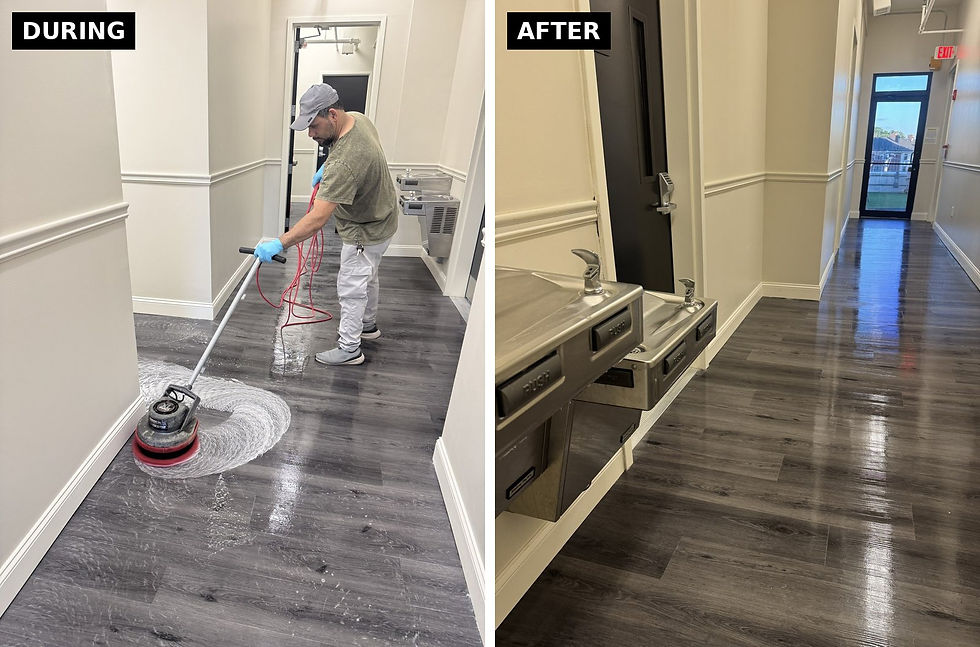
Then we handed the building over to property management, move-in ready.
The common corridor during the final scrub with an orbital floor machine on the LVP, and the same corridor after the final clean.
Equipment on This Job
All of this equipment is our own commercial gear:
• Wide-path sweepers and sweeping compound
• Backpack HEPA vacuums and wet/dry vacuums
• Color-coded microfiber
• Glass-safe scrapers, squeegees, and manufacturer-approved release agents
• An orbital floor machine for the corridor LVP and a compact micro auto-scrubber for the bathroom tile
• Extension poles and high-dusting tools for ductwork and light fixtures
Our crews are OSHA-certified and MEWP (aerial lift) certified.
The Outcome
• The building got about 55,500 sq ft of post-construction cleaning in five visits over 14 days.
• High-end finishes were cleaned without abrasives, using a dry-to-wet sequence.
• We timed the cleaning around the painters' and electricians' punch-list work, so finished areas didn't have to be cleaned twice.
• We checked every unit and common hallway before handover.
• Property management got a move-in-ready building.
What GCs and Developers Should Plan for on Multifamily Turnovers
1. Plan visits, not just a single "final clean." On a multifamily project, splitting the work into rough, detailed, and final-polish visits keeps the cleaning in step with the punch list.
2. Have the final clean start when the site is 95% complete and broom-swept. Our proposals require this, because cleaning ahead of the trades means paying to clean the same units twice.
3. Share the trades' schedule with your cleaning crew. If we know when painters and electricians will be in each unit, we can avoid re-cleaning areas they're still working in.
4. Tell us about the finishes before the job starts. Quartz, stainless, LVP, and tile each need the right products and methods. Abrasives and the wrong chemicals can cause damage that's expensive to fix.
5. Budget time for unit-by-unit checks. A walkthrough of every unit and hallway before handover catches small misses before tenants or property managers find them.
6. Confirm what's in the scope. For example, this project included interior glass only, with no exterior windows. Writing that down up front avoids surprises at turnover.
FAQ
How long does post-construction cleaning take for an apartment building?
This building was about 55,500 sq ft. The clean took five visits over 14 days in three phases: rough, detailed, and final polish. Your timeline will depend on how far along the trades are, the finishes, and how ready the site is.
Why split a multifamily post-construction clean into several visits?
Trades keep making dust until their punch lists are done. Separate visits let us do the debris removal early, the detail work once most of the dusty work is done, and the final polish after all trades have left. That way, finished units don't get dusty again.
How do you clean quartz, stainless, and LVP without damaging them?
We work top to bottom and dry to wet. We dry-dust and HEPA-vacuum before any damp wiping, so drywall dust doesn't turn into an abrasive paste. Then we use plush microfiber and manufacturer-approved release agents instead of abrasive pads.
Did this project include exterior window cleaning?
No. This scope covered interior glass only: removing films, stickers, and paint overspray, then a streak-free finish.
When should a GC or developer schedule the final clean?
Our proposals require the site to be 95% complete and broom-swept before the final clean. For multifamily work, it also helps to book the earlier rough and detailed visits ahead of time so they line up with the punch list.
Related Work
Planning a Multifamily Turnover?


Comments