Commercial Post-Construction Cleaning Guide

Updated: Sep 28
A new warehouse can look finished while drywall dust still sits on roof joists, adhesive haze clouds glass, and debris blocks access to critical equipment. For general contractors, developers, and facility managers, that gap between substantial completion and true readiness can delay inspections, tenant turnover, and operations. This commercial post-construction cleaning guide outlines how to plan a professional cleanup that supports a safe, inspection-ready, move-in-ready commercial property.
Post-construction cleaning is not a single pass with a vacuum and mop. It is a controlled, phased operation that changes as trades finish work, systems are commissioned, and the site moves toward occupancy. The right scope protects finished surfaces, controls airborne dust, and gives project teams a clear standard for turnover.
Why Commercial Post-Construction Cleaning Requires a Plan
Commercial sites create cleaning challenges that do not exist in smaller residential projects. A distribution center may have thousands of square feet of concrete flooring, high-bay shelving areas, dock doors, and ceiling-level dust. A medical office build-out may require detailed cleaning around finished millwork, fixtures, glass partitions, and tenant-facing spaces. Manufacturing and industrial properties often add active equipment, restricted work zones, and elevated cleaning requirements.
The cleanup plan must reflect the building, the construction schedule, and the condition of the site. Cleaning too early can mean rework after additional trade activity. Cleaning too late can put pressure on the final inspection schedule or leave limited time to correct deficiencies. A phased approach gives contractors and owners better control over labor, timing, and final presentation.
Safety also drives the plan. Construction debris can include sharp metal, exposed fasteners, broken glass, silica-containing dust, packaging waste, and chemical residue. High-reach dust removal may require trained aerial lift operators and site-specific fall protection procedures. Professional crews should work within the project’s safety rules, coordinate with site supervision, and keep pathways clear as the building moves toward closeout.
The Three Phases of Commercial Post-Construction Cleaning
Rough Cleaning: Clear the Site for Finishing Work
Rough cleaning begins when major construction debris is ready to be removed and access routes need to be restored. The goal is not a finished appearance. The goal is a safer, more organized jobsite that allows remaining trades to work efficiently.
This phase typically includes collecting construction waste, removing loose debris, sweeping or vacuuming accessible floors, and clearing dust from ledges, window tracks, and horizontal surfaces. Crews may also remove protective coverings, empty packaging, and discarded materials once the contractor confirms they are no longer needed.
Timing matters. Rough cleaning should be scheduled around active trade work so crews are not repeatedly cleaning the same areas. On a large site, it may be more efficient to clean by zone, floor, suite, or operational area rather than waiting for the entire building to reach one milestone.
Detail Cleaning: Address Dust, Surfaces, and Finished Materials
Detail cleaning starts when most heavy work is complete and finished materials are installed. This is where the condition of the building becomes visible. Fine dust settles into corners, mechanical rooms, door frames, vents, light fixtures, cabinet interiors, and elevated surfaces long after the obvious debris has been removed.
A detail clean should use the right method for each surface. Glass requires residue-free cleaning to remove labels, fingerprints, and construction haze without scratching. Finished flooring may need vacuuming, damp mopping, machine scrubbing, or a manufacturer-approved treatment. Stainless steel, painted surfaces, tile, fixtures, and millwork each require compatible products and controlled application.
High-reach areas deserve special attention. Ceiling grids, exposed structure, ductwork, beams, and high ledges can hold dust that later drops onto newly cleaned floors or inventory. In warehouses and industrial facilities, high dusting may require aerial lift-certified technicians, appropriate equipment, and a work plan that protects people and assets below.
Final Punch Cleaning: Prepare for Inspection and Occupancy
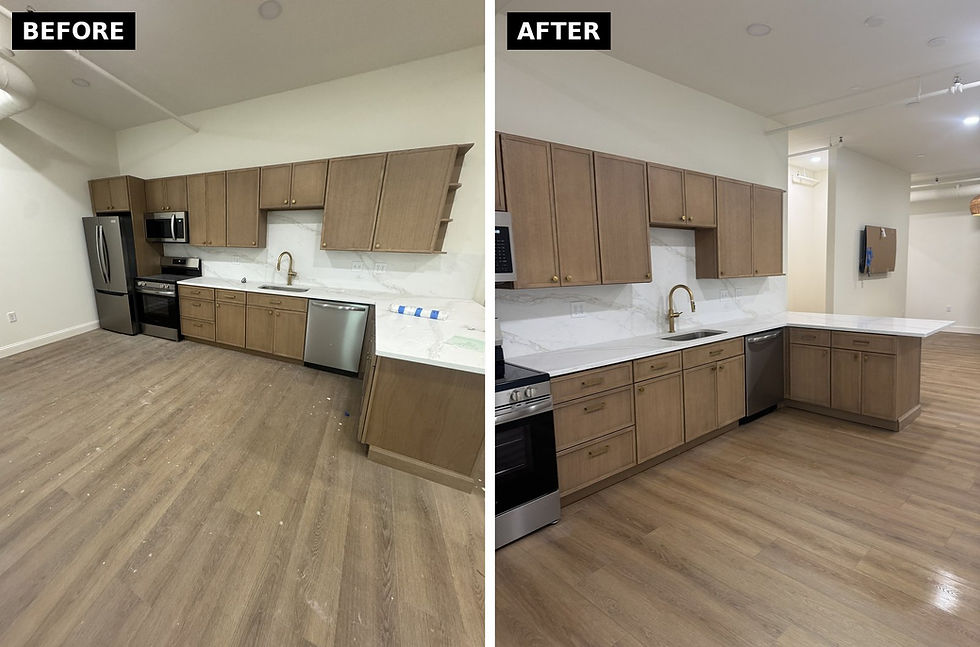
Final punch cleaning is the last controlled pass before turnover. It follows final trade work, punch-list corrections, and contractor approval that the area is ready for presentation. This stage focuses on the details a client, tenant, inspector, or owner will notice immediately.
Crews clean glass and mirrors, sanitize restrooms, wipe doors and hardware, remove labels where authorized, vacuum edges, spot-clean walls, and check floor appearance. They also inspect corners, thresholds, utility closets, elevator interiors, common areas, and entryways. The standard is not simply “clean enough.” The space should be ready to show, inspect, furnish, or operate.
A final punch clean may need more than one visit. If final repairs, furniture installation, signage work, or equipment deliveries occur after cleaning, a touch-up visit can protect the turnover date without requiring a full repeat of the detail scope.
Build the Scope Around the Building’s Real Conditions
A strong cleaning scope begins with an on-site walkthrough. Square footage alone does not determine labor needs. Ceiling height, floor type, debris volume, access restrictions, occupancy deadlines, and the number of finished rooms all affect the work.
For example, a 100,000-square-foot warehouse with open concrete floors may require fewer detail tasks per square foot than a 30,000-square-foot office fit-out with restrooms, break rooms, glass walls, and individual offices. However, the warehouse may require specialized floor equipment, high-reach dust removal, and careful coordination around dock operations. It depends on the property’s layout and the condition left by construction.
The scope should identify who is responsible for debris removal, whether dumpsters are available, which areas remain active, and what materials need special handling. It should also establish access times, staging locations, water and power availability, and the party authorized to approve completed areas. These details prevent avoidable delays once crews are on site.
Safety Controls That Protect the Project
Cleaning crews working in construction and industrial environments should not be treated as an afterthought. They need the same site orientation, hazard communication, personal protective equipment requirements, and access controls expected of other subcontractors.
The appropriate controls vary by project, but a professional operation should account for active equipment, forklift traffic, electrical hazards, overhead work, restricted areas, and changing site conditions. Dust mitigation is especially significant. Dry sweeping can redistribute fine particles instead of removing them, while HEPA-filtered vacuuming and controlled wiping methods help capture dust at the source.
For elevated work, the team should confirm equipment access, floor loading conditions, overhead clearances, and exclusion zones below the work area. Aerial lifts are useful for high-bay spaces and exposed ceilings, but only when operated by trained, authorized personnel following site requirements.
Inspection-Ready Means More Than a Clean Floor
The final walkthrough should be structured, not rushed. Project leaders should inspect the property from the perspective of the next user: a tenant entering a lobby, a warehouse manager walking a dock area, a property manager reviewing common spaces, or an inspector checking accessible rooms.
Look for residual dust on horizontal surfaces, streaks on glass, tape or labels on fixtures, debris in corners, marks around doors, and missed areas above eye level. Check restrooms, mechanical rooms, stairwells, loading areas, and utility spaces. These are often cleaned late or overlooked because they are not part of the main visual path.
A documented punch process is useful when multiple parties are involved. It gives the contractor, owner, and cleaning team a shared list of corrections and helps avoid disagreement over whether an issue is cleaning-related, construction-related, or caused by work completed after the cleaning crew left.
A Scope Checklist Before You Hire
Before a crew mobilizes, put these items in writing. Each one is a common source of change orders when it is left to assumption:
The building areas, square footage, and cleaning phases included (rough, detailed, final punch, or all three)
Start date, work hours, and whether any work must happen at night, on weekends, or around occupied areas
Access requirements: badging, parking, elevators, loading docks, water, power, and staging space
High-reach areas and whether aerial lifts are needed
Who handles dumpsters and bulk debris, and who removes protective film and coverings
Whether window cleaning, floor-machine work, consumable restocking, and touch-up visits are included
Priority zones, such as leasing offices, model units, tenant suites, and loading areas
The acceptance standard for each area and the person authorized to approve completion
Plan for Schedule Changes and Phased Releases
Construction schedules move. Trades return, inspections shift, weather intervenes, and finished areas are often released in sections rather than all at once. A cleaning partner should be able to scale labor, adjust shifts, sequence work by priority, and return for targeted touch-ups without repeating the full detail scope.
Ask each provider how they handle a compressed cleaning window and who communicates changes on their side. The answer matters more than the hourly rate when the turnover date is fixed.
The Handoff From Turnover to Recurring Service
Many properties need ongoing attention the day construction cleaning ends. New occupants bring in boxes and furniture, final contractor work may continue in isolated areas, and warehouses begin receiving inventory. Entrances, restrooms, corridors, and break areas see first-day traffic before operations settle.
A recurring janitorial plan can bridge that gap and protect the condition achieved at turnover. A good first maintenance plan also covers periodic deep cleaning of high-traffic areas and an early check of HVAC filters after construction dust. Not every project needs the same level of ongoing service: a stabilized office may need only a short post-turnover plan, while a busy distribution center may need a broader program. The right answer depends on occupancy timing and the standard the facility must keep.
Post-Construction Cleaning in Portland and Across Maine
CC Smart Maintenance is based at 411 Congress St in Portland and provides post-construction cleaning for general contractors, developers, and property managers across Maine and the greater New England region. Crews are OSHA and aerial-lift certified, and projects are run in three phases: rough clean, detailed clean, and final punch and touch-up.
Maine projects bring a few conditions worth planning for:
Seasonal soil. Winter and spring bring sand, salt, slush, and mud onto job sites. Entry matting, floor protection along travel paths, and an extra entry-area pass during closeout help protect new floors.
Temperature. Unheated or partially heated spaces can limit wet cleaning and floor work in cold months. Confirm heat is available in finished areas before the detailed and final cleans.
Travel and scheduling. Projects outside the Portland area should confirm crew mobilization and lift delivery early, especially when several closeouts overlap.
Building mix. Commercial projects in the region range from office and retail fit-outs to warehouses and multifamily buildings, each with a different balance of detail work, floor care, and high-reach dust removal.
For a bid, share the project location, square footage, phases needed, ceiling heights, finish level, and target turnover date. CC Smart Maintenance provides post-construction bids within 24 hours of receiving project details, or you can request a walkthrough.
Choosing a Commercial Cleaning Partner
The lowest quote is not always the lowest project cost. A crew that lacks the right equipment, safety training, or staffing capacity may create rework, miss a turnover date, or leave critical high-reach areas unfinished. For large or complex properties, evaluate providers on their ability to scale labor, follow site safety procedures, manage phased work, and perform detailed quality checks.
Ask how the company handles changing schedules, active jobsite conditions, and post-clean touch-ups. Confirm insurance, training, equipment capability, and experience with the building type. For New England contractors and facility teams, CC Smart Maintenance provides structured post-construction cleaning support built for demanding commercial and industrial environments.
A clean turnover is not a cosmetic extra at the end of construction. It is the final operational step that helps the property open safely, present professionally, and start its next phase without unnecessary delay.
Frequently Asked Questions
What are the phases of commercial post-construction cleaning?
Most commercial projects use three phases. A rough clean removes debris and bulk dust while trades are still working. A detailed clean restores surfaces, removes adhesives and overspray, and washes glass. A final punch clean removes newly settled dust right before inspection and move-in. CC Smart Maintenance runs all three phases for general contractors and developers across Maine and New England.
When should a GC schedule the post-construction cleaning crew?
Book the crew when the schedule is set, not in the last week. The rough clean follows major demolition and rough-in work, the detailed clean follows finishes, and the final punch lands just before the inspection or owner walkthrough. Early booking matters on Portland-area and Maine projects, where several closeouts often compete for the same crews and lifts.
How is commercial post-construction cleaning priced?
Pricing depends on square footage, the number of phases, ceiling heights and lift needs, finish level, debris volume, and schedule constraints such as night or weekend work. A site walkthrough gives the most accurate number. CC Smart Maintenance offers post-construction bids within 24 hours of receiving project details, so you can lock the cleaning line item early.
What does inspection-ready mean for a commercial space?
Inspection-ready means more than clean floors. Dust is removed from high ledges, fixtures, vents and glass; labels, stickers and overspray are gone; restrooms and kitchens are detailed; and exits and life-safety equipment are clear. The goal is a space an inspector, owner or tenant can walk without generating punch-list items for cleaning.
Do you handle post-construction cleaning outside Portland?
Yes. CC Smart Maintenance is based at 411 Congress St in Portland and serves projects across Maine and the greater New England region. Share the project location, square footage, phases needed and target turnover date, and the team will confirm crew size, equipment and schedule for your site.
Need a crew in Portland or anywhere in Maine and New England? CC Smart Maintenance is OSHA and aerial-lift certified. Call (207) 358-0837 or request a walkthrough and quote.


Comments