Rough Clean vs Final Clean for Commercial Projects

Updated: Sep 28
A construction project can look nearly complete and still be weeks away from turnover-ready. The difference often comes down to understanding rough clean vs final clean and scheduling each phase when it can do its job properly. For general contractors, developers, and property managers, these are not interchangeable services. Each supports safety, trade coordination, inspection readiness, and the quality of the finished space.
A clear cleaning plan prevents last-minute labor gaps, repeat work, and the familiar scramble that happens when a project is technically complete but not ready for an owner, tenant, or inspector. The right phase, performed at the right time, protects the closeout schedule.
What Is a Rough Clean?
A rough clean is the first substantial cleaning phase performed after major construction activity has created debris, dust, and packaging throughout the work area. It is typically scheduled once the heaviest trades have completed their work and the space is safe enough for a cleaning crew to move through efficiently.
The goal is not polished presentation. The goal is to remove the bulk of construction waste and establish a safer, more workable environment for the remaining trades, punch-list activity, and finish work.
In a commercial building, warehouse, manufacturing facility, or multi-tenant development, a rough clean commonly includes removal of loose debris, scrap materials, cardboard, plastic wrap, and discarded packaging. Crews sweep or vacuum floors, collect trash from work areas, and address broad dust accumulation on accessible surfaces. Depending on the scope, the work may also include cleaning window tracks, removing labels from installed fixtures, and preparing restrooms or common areas for later detailing.
Rough cleaning has a direct impact on site control. Debris in corridors, loading areas, stairwells, and active work zones creates trip hazards and slows down every contractor that follows. Removing that material early also makes defects, unfinished work, and safety concerns easier to see.
Rough Clean Timing Matters
Starting too early can create unnecessary repeat work. If drywall sanding, overhead mechanical work, concrete cutting, or fixture installation is still ongoing, new dust and debris will quickly replace what was removed.
Waiting too long creates a different problem. Construction debris can block access, clutter staging areas, and make final trade work less efficient. The best timing depends on the project sequence, the number of active trades, and whether portions of the building can be cleaned and released in phases.
For large projects, a phased rough clean is often more practical than a single mobilization. A distribution center may need one area cleared for racking installation while another remains under construction. A multifamily project may need completed floors cleaned while upper levels are still active. The cleaning scope should follow the construction schedule, not work against it.
What Does Rough Cleaning Include?
A rough clean covers more than the open floor. It reaches the spaces where debris and dust collect during the build: entrances, interior rooms, stairwells, elevator lobbies, utility closets, restrooms, break areas, and corridors. In industrial and logistics buildings, it can also cover dock offices, mezzanines, and high-traffic paths near equipment.
Typical rough-clean tasks
Removing loose debris, packaging, and abandoned materials from designated work areas
Vacuuming or sweeping floors, corners, ledges, and accessible surfaces
Collecting dust from window frames, door frames, sills, trim, and fixtures
Wiping heavy dust from accessible cabinets, counters, and built-in surfaces
Cleaning restroom fixtures and utility areas enough for continued job-site use
Removing protective film, stickers, and tape only when approved for that surface
Clearing egress routes, stairways, and common areas of debris that creates a safety or access issue
Confirm the exact task list during an on-site estimate. A large distribution center may need ride-on floor equipment and a zone-by-zone plan, while a tenant fit-out may need careful vacuuming around finished millwork while neighboring suites are still under construction.
What a rough clean usually does not include
A rough clean makes the site workable; it does not make it ready for occupancy. It typically does not include polishing every fixture, removing every paint speck, detailing inside drawers, or delivering streak-free glass. Specialty work such as pressure washing, heavy adhesive removal, carpet extraction, exterior window cleaning, or hazardous-material handling should be listed separately in the scope if it is needed.
Scheduling more than one rough-clean pass
Many projects benefit from two rough-clean passes: one after drywall, overhead mechanical work, and major installations, and another after finish trades complete their work. Before each pass, confirm the site has adequate lighting, safe entry routes, water where needed, waste containers, and an approved disposal path. A crew cannot clear a room that is still being used for material storage.
Rough Clean vs Final Clean: The Core Difference
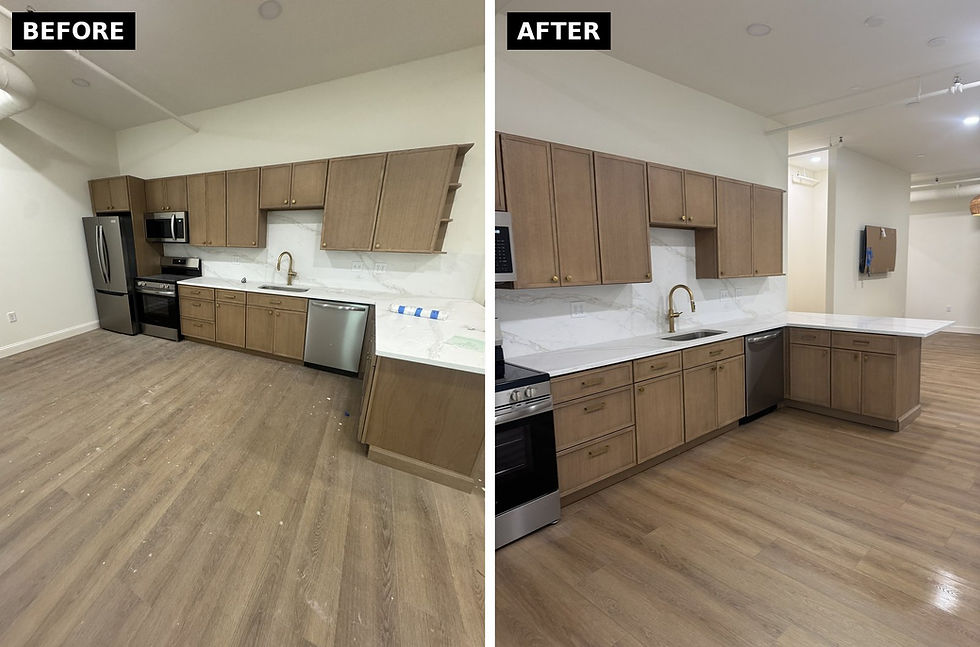
The simplest distinction is purpose. A rough clean removes the construction mess. A final clean delivers the finished environment.
Final cleaning happens after construction, major punch-list work, and dust-producing activities are substantially complete. At this stage, the cleaning crew focuses on detailed presentation, remaining dust removal, and the condition of the surfaces that owners, tenants, customers, and inspectors will see.
A rough clean supports the jobsite. A final clean supports turnover.
That difference affects labor, equipment, timing, and quality standards. A rough clean may require debris handling, high-capacity vacuums, floor sweeping equipment, and crews prepared to work around an active jobsite. A final clean requires more detailed surface work, careful product selection, streak-free glass cleaning, edge work, and a disciplined inspection process.
What a Final Clean Should Cover
Final cleaning is a detailed, room-by-room or zone-by-zone service. It is designed to remove the fine dust, smudges, labels, residue, and overlooked material left behind after construction is complete.
The exact scope varies by facility, but a commercial final clean generally addresses floors, baseboards, doors, frames, glass, interior windows, ledges, fixtures, cabinets, countertops, restrooms, break areas, and accessible vents or diffusers. Crews vacuum carpets and detailed floor edges, damp-wipe horizontal surfaces, clean mirrors and glass, and remove adhesive residue where appropriate.
In warehouses and industrial settings, final cleaning may include dust mitigation on racking, beams, ledges, equipment exteriors, and other high-reach surfaces. These areas should not be ignored simply because they are above eye level. Settled dust can affect appearance, housekeeping standards, equipment performance, and ongoing facility maintenance.
Floor cleaning is especially important during final turnover. Concrete, resilient flooring, tile, epoxy, carpet, and polished surfaces each require different methods. Using the wrong equipment or chemical can leave haze, streaking, surface damage, or residue that becomes visible under finished lighting. A qualified commercial cleaning partner should assess the surface condition before selecting the process.
Areas Most Often Missed Before Move-In
A final clean is what makes a space move-in ready. Floors, restrooms, and obvious debris rarely get missed. The costly surprises show up under final lighting or during the owner walkthrough: window tracks, door tops, elevator thresholds, sprinkler heads, return-air grilles, cabinet interiors, loading dock doors, and high ledges.
Industrial and logistics properties add their own list. Warehouse floors may need machine scrubbing to remove tracked construction soil, and mezzanines, rack-adjacent surfaces, dock areas, and safety markings must be cleaned without damaging them. If the building is about to receive inventory or equipment, dust control becomes an operational requirement.
Plan the handoff after move-in as well. A tenant who receives a move-in-ready space will usually need recurring janitorial service soon after, and planning that transition early keeps high-traffic areas from declining in the first weeks of use.
Final Clean Is Not the Same as Punch Cleaning
A final clean prepares the building for inspection or occupancy. Punch cleaning is the follow-up service performed after the remaining trades complete corrections, touch-ups, or owner-requested changes.
This distinction matters because punch-list work often creates a fresh layer of dust, fingerprints, packaging, and debris. Even a well-executed final clean can be affected by electricians replacing plates, painters completing touch-ups, millwork crews making adjustments, or installers bringing in furniture and equipment.
For that reason, many commercial projects benefit from three stages: rough clean, final clean, and final punch cleaning. The last visit is usually shorter and more targeted, but it can make the difference between a space that is technically clean and one that is genuinely ready to hand over.
How to Scope the Right Cleaning Phase
The cleaning scope should be based on project conditions, not a generic checklist. Before scheduling work, evaluate the amount of debris, the active trade schedule, the building footprint, surface types, access restrictions, and turnover date.
A rough clean is appropriate when bulk material is still present, broad dust removal is needed, and the site remains active. A final clean is appropriate when finished surfaces are installed, dust-generating work has stopped, and the project needs a detailed presentation standard. If construction will continue after the final clean, plan for a punch clean rather than expecting the initial final clean to carry the project through turnover.
Commercial facilities also require attention to operational realities. In an occupied warehouse, cleaning may need to happen around shipping schedules, forklift traffic, and restricted zones. In a manufacturing environment, crews may need to follow site-specific safety procedures and avoid interrupting production. In a newly constructed office or mixed-use property, access may depend on elevator availability, loading dock coordination, and phased release of completed areas.
Safety Is Part of the Cleaning Scope
Post-construction cleaning involves more than mops and vacuums. Sites may contain exposed edges, overhead dust, lift work, uneven flooring, restricted mechanical areas, and traffic from other contractors. Cleaning teams need to understand jobsite rules, personal protective equipment requirements, and safe access procedures.
High-reach cleaning deserves particular attention. Dust above ceilings, on structural steel, racking, pipes, and beams cannot be handled safely with improvised methods. When aerial access is required, trained and certified crews should use the correct equipment and follow the facility's lift and safety protocols.
CC Smart Maintenance approaches post-construction and industrial cleaning as an operational service, with OSHA-certified technicians and Aerial Lift-certified crews available for demanding commercial environments. That capability matters when a project requires both detailed finish work and safe execution across large or complex spaces.
Common Mistakes That Create Turnover Delays
The most common mistake is treating cleaning as a single end-of-project task. When cleaning is not built into the schedule, crews are brought in after deadlines have already tightened, access is limited, and other trades are still creating dust.
Another issue is underestimating high-reach and fine-dust work. Visible debris may be gone after a rough clean, but dust can remain on ledges, HVAC components, lighting, racking, and finished surfaces. Once the building is occupied, that dust becomes more difficult and expensive to address.
Finally, avoid assuming every final clean has the same definition. A basic turnover clean, a detailed owner walk-through clean, and a final punch clean may all be described as "final cleaning," but they require different labor levels and deliverables. Clear scope language protects the budget and prevents disputes at closeout.
Plan Cleaning as a Closeout Operation
The strongest projects treat cleaning as part of construction closeout, not as an afterthought. Coordinate cleaning dates with trade completion, define which areas are released for service, and confirm whether a punch-clean visit is required after corrections are complete.
When rough cleaning clears the jobsite at the right point and final cleaning is scheduled after dust-producing work stops, the result is a safer site, a cleaner inspection, and a more controlled handoff. Clean. Smart. Advanced. starts with matching the cleaning phase to the work that is actually happening on site.
Frequently Asked Questions
What is the difference between a rough clean and a final clean?
A rough clean happens during construction and removes debris, packaging and bulk dust so trades can keep working. A final clean happens after finishes are complete and details every surface, fixture and floor for inspection and occupancy. Some projects add a separate final punch clean right before the walkthrough to remove newly settled dust.
What does rough cleaning include on a job site?
A commercial rough clean typically includes removing construction debris and trash, sweeping and HEPA vacuuming floors, initial dust mitigation on accessible surfaces, and clearing work areas for the next trade. It usually does not include detailed glass, fixture polishing or final floor finishing, which belong to the detailed and final cleans.
When should the rough clean be scheduled?
Schedule the rough clean after major demolition, framing, drywall and rough-in work, and before finish trades such as flooring, paint and millwork move in. On larger projects, rough cleaning may happen by floor or zone. Getting it on the GC's schedule early keeps dust from being sealed into finishes.
What areas are most often missed in a final clean?
Commonly missed areas include tops of doors and door frames, window tracks, light fixtures, vents and diffusers, inside cabinets and drawers, restroom partitions, electrical cover plates, and stickers or film on glass and appliances. A zone-by-zone checklist and a walkthrough with the site lead catch these items before inspection.
Need a crew in Portland or anywhere in Maine and New England? CC Smart Maintenance is OSHA and aerial-lift certified. Call (207) 358-0837 or request a walkthrough and quote.


Comments