Cleaning Subcontractor Qualifications That Matter
- Tony Duarte

- Aug 10
- 6 min read
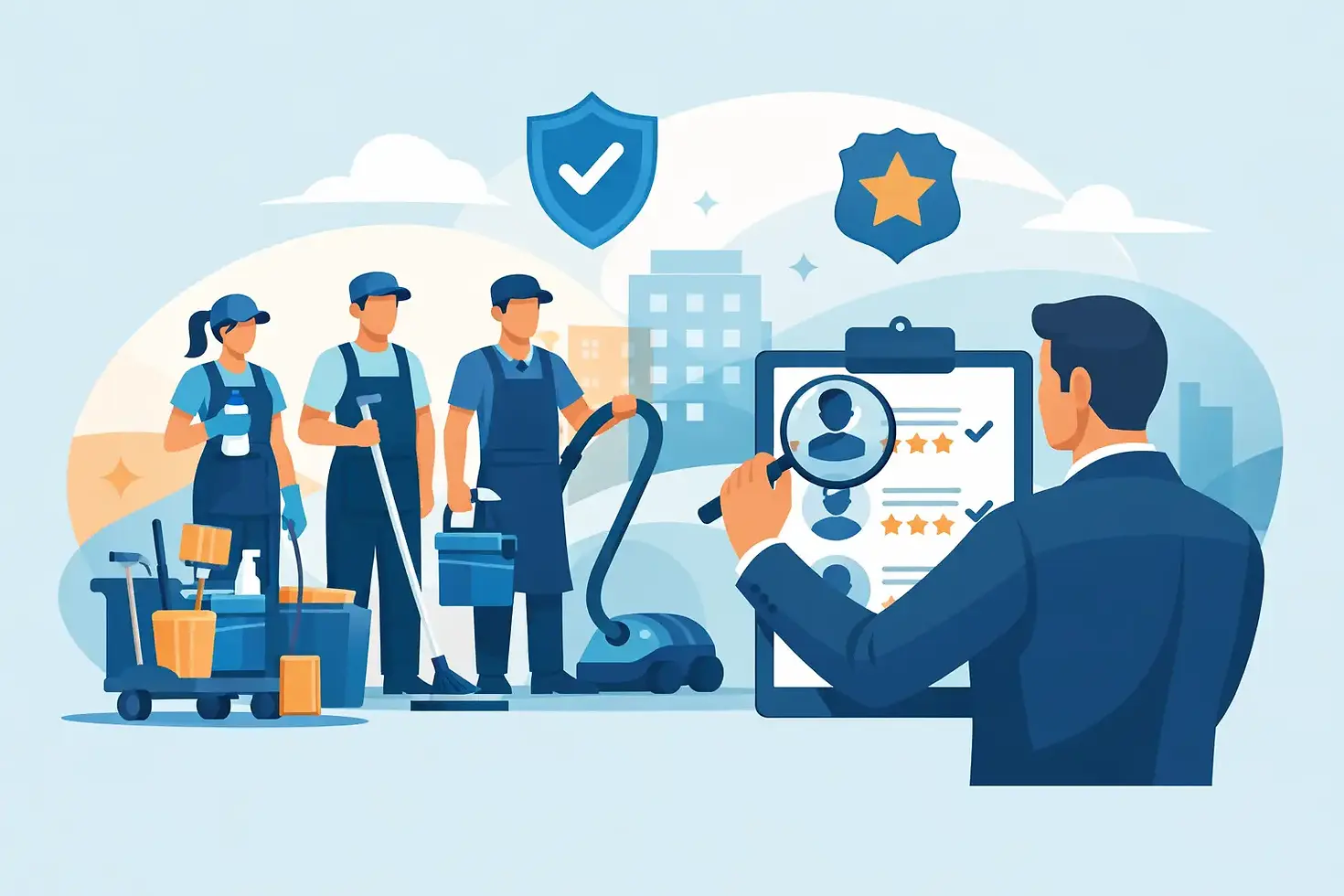
A cleaning subcontractor can either protect a project schedule or become another item on the punch list. On a post-construction turnover, warehouse floor project, or active manufacturing site, the difference comes down to verified cleaning subcontractor qualifications - not the lowest number on a bid sheet.
Commercial cleaning crews often work around other trades, energized equipment, elevated areas, traffic patterns, and strict occupancy deadlines. Property managers and general contractors need a partner that can perform within those conditions without creating safety, compliance, or quality issues. The right qualification process identifies whether a subcontractor has the people, controls, and experience to deliver the agreed scope.
Why Qualifications Matter on Commercial Sites
Cleaning may be one trade in a larger operation, but it affects the final appearance, safety, and readiness of the entire facility. Dust left on high surfaces can settle after final cleaning. Improper equipment use can damage finished flooring. A crew without site discipline can interfere with active work, block access routes, or miss a critical area before inspection.
These risks increase in large-footprint environments. A logistics facility may require ride-on floor equipment and crews that understand dock traffic. A construction project may need phased rough, detail, and final cleaning around changing trade schedules. A manufacturing facility may require specific procedures for dust, oils, or production-adjacent areas.
Qualifications establish whether the subcontractor understands those realities before work begins. They also give the hiring contractor a clearer basis for comparing proposals. Two vendors may both quote “final cleaning,” but only one may have the trained staffing, lift certifications, and quality controls to complete high-reach dust removal and detailed turnover work safely.
Core Cleaning Subcontractor Qualifications to Verify
Insurance That Matches the Work
Start with current certificates of insurance, but do not treat them as a formality. General liability, workers' compensation, and commercial auto coverage should be active and appropriate for the project. Depending on the contract and site, additional insured status, waiver of subrogation, and specific coverage limits may be required.
The question is not simply whether the company is insured. Confirm that its coverage aligns with the work environment. A subcontractor performing basic office janitorial work has a different exposure profile than a crew operating lifts on a construction site or using industrial floor equipment in a distribution center.
Documented Safety Training
Safety credentials should connect directly to the job scope. OSHA-trained technicians are better prepared to recognize hazards, follow site rules, use personal protective equipment, and work within established safety plans. For crews performing elevated work, Aerial Lift certification is a meaningful requirement, not a marketing detail.
Ask how safety training is maintained and communicated in the field. A capable subcontractor can explain its approach to job hazard analysis, chemical handling, equipment inspection, incident reporting, and daily site expectations. The answer should be specific to commercial operations, not a vague promise to “work safely.”
Relevant Project Experience
Experience should be measured by the type of facility, not just the number of years in business. A contractor cleaning small offices may do excellent work in that setting while lacking the staffing model, equipment, or construction coordination needed for a 200,000-square-foot turnover.
For post-construction cleaning, look for experience with rough cleans, detail cleans, final cleans, and punch-list support. The subcontractor should understand how debris removal, adhesive residue, protective-film removal, glass detailing, restroom sanitizing, and high-dust work fit into the final project sequence.
For industrial and logistics environments, ask about floor care, high-reach cleaning, loading-dock areas, production schedules, and operating around active equipment. The crew must know how to clean thoroughly without disrupting facility operations or entering restricted areas without authorization.
Staffing Capacity and Supervision
A proposal is only as dependable as the labor behind it. Confirm the expected crew size, shift coverage, supervisor presence, and backup plan if staffing changes. This matters when a completion date moves forward, a new phase opens unexpectedly, or a large area requires a rapid response.
Reliable subcontractors do not rely on last-minute labor alone for complex projects. They use trained crews, designated supervision, and a realistic plan for scaling up when the scope demands it. Ask who will be the on-site lead, how progress will be tracked, and who has authority to address issues during the shift.
Capacity is also about equipment. A subcontractor should have access to the vacuums, floor machines, scrubbers, lifts, supplies, and containment tools required for the scope. If specialized equipment is necessary, clarify whether it is owned, rented, or supplied by the client, and confirm who is responsible for safe operation.
Clear Scope Control
Commercial cleaning scopes can become unclear quickly. “Clean the building” does not define whether the work includes interior glass, ceiling diffusers, high ledges, floor finish removal, debris hauling, pressure washing, or repeat visits after other trades return.
A qualified subcontractor asks detailed questions before pricing. It should identify square footage, surface types, occupancy status, access restrictions, work hours, waste disposal requirements, and areas that need special attention. This protects both parties from change-order disputes and missed expectations.
The best scopes also define what completion looks like. On a final construction clean, that may mean move-in-ready rooms, dust-free horizontal surfaces, polished fixtures, cleaned glass, and floors ready for inspection. In recurring janitorial service, it may mean documented task frequencies, restocking responsibilities, and response times for urgent needs.
Quality Control You Can See
Quality control should not depend on a client discovering issues after the crew has left. Ask how the subcontractor inspects completed work, documents deficiencies, and handles corrections. Site walk-throughs, zone checklists, supervisor inspections, and closeout reporting are practical signs of a controlled operation.
This is especially important during final cleaning. Construction dust can reappear after HVAC activation or following work by another trade. A strong subcontractor distinguishes between its own completed work, new contamination, and areas that need coordinated re-cleaning. That discipline helps project teams avoid unnecessary conflict at closeout.
Communication and Site Coordination
Commercial projects change. Access may be delayed, a tenant walk-through may be added, or a facility manager may need a work area cleaned outside normal hours. The subcontractor should provide a clear point of contact and communicate schedule, manpower, progress, and constraints early.
Look for direct communication rather than promises without details. If a crew cannot access a space, encounters unfinished work, or identifies a safety concern, the project team should hear about it promptly. Fast, accurate communication allows the site team to make decisions before a small issue affects turnover.
When Requirements Should Be More Stringent
Not every project needs the same level of qualification. A small after-hours office cleaning contract may not require lift-certified labor or industrial-grade floor equipment. However, requirements should increase when work includes active construction, occupied medical or tenant-facing spaces, high ceilings, chemical-sensitive areas, heavy equipment traffic, or accelerated closeout schedules.
The same principle applies to pricing. A lower bid may be appropriate if the scope is simple and the service window is flexible. On a high-stakes project, a low number can indicate missing labor hours, inadequate supervision, incomplete insurance, or an assumption that key tasks are excluded. Compare the operating plan, not just the total price.
A Practical Qualification Review Process
Before awarding work, review insurance documents and safety credentials, then compare the subcontractor's past project experience to your actual site conditions. Require a written scope with exclusions, labor assumptions, schedule, equipment plan, and quality-control process. For larger projects, an on-site estimate is usually the better starting point because it exposes access, surface, debris, and sequencing issues that drawings or photos may not show.
It also helps to ask for references from similar work. The most useful reference questions are practical: Did the crew arrive as scheduled? Was supervision present? Did the company respond to changes? Were closeout items handled without delay? These answers reveal more than a generic endorsement.
CC Smart Maintenance approaches commercial cleaning qualifications as operating requirements, not paperwork. Certified crews, site-specific planning, and defined cleaning phases help construction, industrial, and property teams maintain control from the first rough clean through final turnover or ongoing service.
Choose a subcontractor whose qualifications match the conditions your site actually presents. When safety, staffing, scope, and quality controls are confirmed before mobilization, the cleaning team is positioned to leave the facility ready for the next phase - not create one more problem for your team to solve.


Comments