Inspection Recovery Cleaning Example for Commercial Sites

Updated: Sep 29
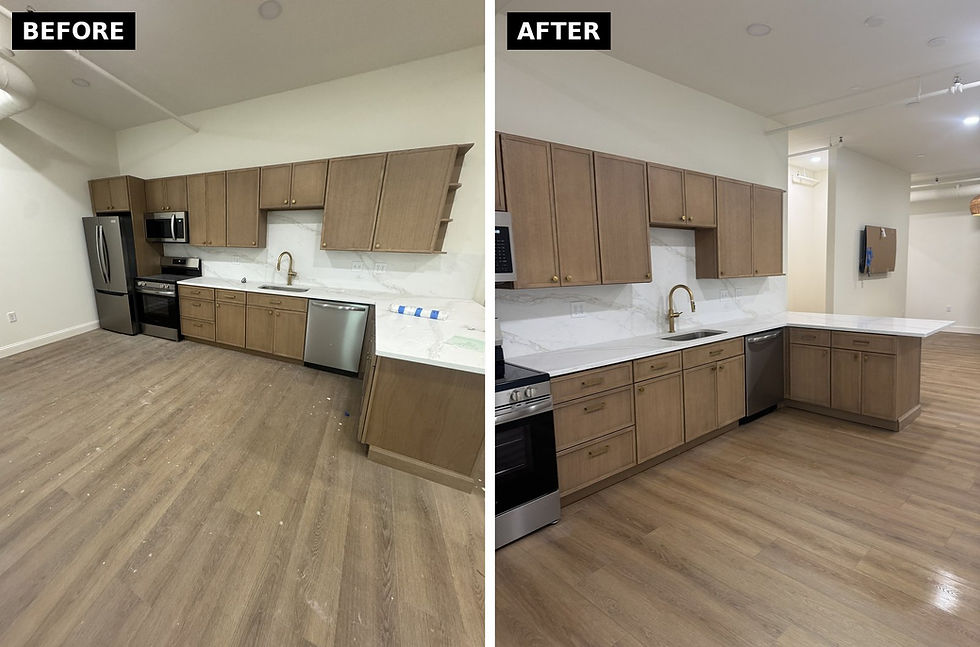
A failed walkthrough does not always point to a construction defect or operational breakdown. In many commercial settings, the issue is recoverable through disciplined cleaning, dust control, debris removal, and a documented final pass. This inspection recovery cleaning example shows how a cleaning partner can correct visible conditions quickly without disrupting the work that still needs to happen on site.
For general contractors, facility managers, and property teams, the objective is not simply to make an area look better for the next inspector. It is to restore a safe, presentable, and verifiable condition that supports turnover, occupancy, or continued operations.
A failed walkthrough does not always point to a construction defect or operational breakdown. In many commercial settings, the issue is recoverable through disciplined cleaning, dust control, debris removal, and a documented final pass. This inspection recovery cleaning example shows how a cleaning partner can correct visible conditions quickly without disrupting the work that still needs to happen on site.
For general contractors, facility managers, and property teams, the objective is not simply to make an area look better for the next inspector. It is to restore a safe, presentable, and verifiable condition that supports turnover, occupancy, or continued operations.
What Inspection Recovery Cleaning Means
Inspection recovery cleaning is a focused response to deficiencies identified during a quality-control walk, owner review, safety inspection, punch-list review, or pre-occupancy inspection. The scope targets cleaning-related conditions that could delay approval, damage first impressions, or create preventable safety concerns.
Typical findings include construction dust on horizontal surfaces, debris in corners and mechanical rooms, tracked soil at entryways, adhesive residue on glass, uncleaned restroom fixtures, dusty exposed ductwork, or warehouse floors marked by tire residue and packaging waste. In an active facility, inspectors may also flag blocked access areas, loose debris near equipment, and dust accumulation on high ledges.
The key distinction is scope control. A recovery crew can remove dust, soil, residue, and debris. It cannot correct incomplete trade work, repair damaged finishes, or conceal code issues. Before work begins, the site team should separate cleaning deficiencies from repair items so every party knows what must be completed before reinspection.
Inspection Recovery Cleaning Example: A Distribution Facility
Consider a newly completed 180,000-square-foot distribution facility in New England. The general contractor has completed a final clean and scheduled an owner walkthrough before handover. During the walkthrough, the owner identifies conditions that make the building appear unfinished: dust on high steel and sprinkler piping, fine debris along rack lines, tire marks at loading entrances, smudged glass at office partitions, and residue on several restroom fixtures.
None of these findings require a major construction correction. But collectively, they put the turnover schedule at risk. The owner wants the facility presented in move-in-ready condition within 48 hours.
The recovery plan begins with an on-site assessment. The cleaning supervisor walks the facility with the contractor or owner representative, confirms the exact locations of each deficiency, identifies active work zones, and notes any equipment or materials that must remain protected. The team records the findings by area rather than relying on a broad instruction such as “clean the warehouse again.”
In this example, the scope is divided into five work areas: the warehouse floor, high-reach structural surfaces, dock doors and loading entries, office and amenity spaces, and exterior-adjacent entrance zones. This prevents labor from being wasted on areas that already meet the required standard.
Phase One: Control Access and Protect the Work Area
Before cleaning starts, the crew establishes safe access and work boundaries. In the warehouse, lift paths are reviewed, pedestrian routes are kept clear, and the team confirms that rack installation and electrical work are complete in the targeted zones. Aerial lift work is scheduled when other trades are not working directly below the cleaning area.
For high-reach dust removal, trained technicians use appropriate access equipment and personal protective equipment. OSHA-certified and Aerial Lift-certified crews matter here because overhead cleaning is not a routine floor-cleaning task. Poor lift positioning, unmanaged drop zones, or uncontrolled dust can create a new safety problem while trying to solve an inspection issue.
Sensitive surfaces are also protected. Office flooring, finished equipment, electrical panels, and stored materials may require covering, isolation, or a different cleaning method. The right approach depends on whether the building is vacant, partially operational, or occupied.
Phase Two: Remove Dust From the Top Down
The crew addresses high surfaces before detailed floor work. This sequence matters. Cleaning warehouse floors first and then disturbing overhead dust creates rework and can leave a visible film on finished surfaces.
Technicians remove dust from exposed steel, pipes, conduit, ledges, tops of dock doors, and other elevated surfaces using methods suited to the site conditions. The goal is controlled capture and removal, not simply moving dust into the air. In facilities with sensitive inventory, active machinery, or specialized ventilation requirements, the cleaning method may need to be adjusted to protect operations.
Once high-reach areas are complete, the team cleans walls, door frames, windowsills, racks, and other vertical or mid-level surfaces. Particular attention is given to corners and transitions where post-construction debris often collects. These are the areas inspectors notice because they reveal whether the final clean was systematic or rushed.
Phase Three: Detail the Public-Facing and Tenant-Facing Areas
The office area receives a separate detailed-cleaning pass. Glass partitions are cleaned to remove fingerprints, labels, and adhesive marks. Restrooms are checked fixture by fixture for dust, residue, water spots, and remaining installation materials. Break rooms, lobbies, and entry doors are cleaned with occupancy in mind, not just construction completion in mind.
This phase is where visual standards carry the most weight. A warehouse may be judged on safety, access, and operational readiness, while an office suite is judged immediately on finish quality and presentation. The same project can require different cleaning priorities in different zones.
In the distribution facility example, the crew also finds small plastic fragments and drywall dust beneath several workstations. These were not included in the original walkthrough notes, but removing them is part of a proper recovery effort. A narrowly scoped response should still account for adjacent conditions that would undermine the final result.
Phase Four: Restore Warehouse Floors and Dock Areas
With overhead and detailed work complete, the crew turns to the large-footprint floor areas. Debris is collected first, including packaging, fasteners, wood fragments, and dust piles along rack bases. The floor is then cleaned using equipment and chemistry appropriate for the surface and soil load.
At loading entries, tire marks and tracked soil may need more than a quick mop. Mechanical floor cleaning can provide a more consistent finish across wide concrete surfaces, but the method depends on the floor coating, curing status, traffic level, and whether the area can be temporarily closed.
Dock areas receive additional attention because they combine exterior dirt, forklift traffic, and heavy foot traffic. Cleaning these zones supports both appearance and slip-resistance expectations. It also reduces the chance that soil will be carried back into offices or finished warehouse aisles before the reinspection occurs.
Verification Is Part of the Recovery Scope
A recovery clean should end with a deliberate quality-control walkthrough, not a crew departure after the last machine pass. The supervisor compares completed work against the documented deficiencies, checks areas under normal lighting, and verifies that debris, dust, and residue have been removed from the specified locations.
Photos can be useful for confirming completion, especially when the owner, project manager, and cleaning contractor are coordinating remotely. They are not a substitute for a site walkthrough, but they create a clear record of condition before reinspection.
The project team should also confirm that cleaning did not expose unresolved construction items. For example, cleaning residue off a glass partition may reveal a scratched panel. That is not a cleaning failure, but it should be identified before the owner’s next walk so the responsible trade can address it.
Where Recovery Cleaning Can Go Wrong
The most common mistake is treating every inspection issue as a general cleaning request. That leads to unclear expectations, duplicated labor, and missed conditions. A better approach is to define the specific deficiencies, the affected zones, access limitations, and the required completion time.
Another mistake is rushing the sequence. If multiple trades are still generating dust or debris, a final cleaning pass may have to be scheduled after their work is complete. Cleaning too early can create avoidable rework. On the other hand, waiting until the day before turnover can leave no room for corrections. The right timing depends on trade completion, site access, and the standard expected by the owner.
Safety cannot be treated as an afterthought. High-reach work, active forklifts, wet floors, temporary power, and unfinished surfaces require a crew that understands commercial jobsite conditions. CC Smart Maintenance plans recovery work around these realities, with trained personnel and a scope built for the actual facility rather than a generic checklist.
A Better Standard for the Reinspection
A successful reinspection is easier when the cleaning team receives the walkthrough notes early, has access to the affected areas, and can coordinate with the superintendent or facility contact. Clear ownership of open repair items prevents cleaners from waiting on unfinished work or being asked to correct conditions outside their scope.
For commercial sites, the best recovery cleaning is measured by more than a cleaner appearance. The building should be safer to walk, easier to evaluate, and ready for the people who need to occupy or operate it. When the next inspection date matters, a disciplined cleaning response gives the project team a practical path forward instead of another preventable delay.
Frequently Asked Questions
What is inspection recovery cleaning?
Inspection recovery cleaning is a targeted clean after a failed or at-risk inspection, when dust, debris or residue are holding up sign-off. The crew addresses the items cited, works from high surfaces down, restores floors and public-facing areas, and verifies results before reinspection. It is scoped around the inspection findings rather than a general checklist.
How quickly can a recovery clean be organized?
That depends on the size of the site, heights involved and crew availability. The fastest path is sharing the inspection notes, floor plans and reinspection date right away. CC Smart Maintenance reviews the scope and confirms crew size and equipment; for post-construction work, the company offers bids within 24 hours of receiving details.
Why does high-reach dust cause failed inspections?
Dust on rafters, high ledges, lights and ductwork often falls onto cleaned floors and fixtures after the fact, or is visible to inspectors looking up. In warehouses and distribution facilities it is often the missed scope. Aerial-lift certified crews can safely remove it first, so lower surfaces stay clean through reinspection.
How do you verify a recovery clean before reinspection?
Walk the site zone by zone against the original inspection notes, check high surfaces, glass, fixtures and floors, and document completed items with photos. Any remaining issues get corrected before the inspector returns. Verification is part of the recovery scope, not an extra, because the goal is passing the next inspection.
Need a crew in Portland or anywhere in Maine and New England? CC Smart Maintenance is OSHA and aerial-lift certified. Call (207) 358-0837 or request a walkthrough and quote.
What Inspection Recovery Cleaning Means
Inspection recovery cleaning is a focused response to deficiencies identified during a quality-control walk, owner review, safety inspection, punch-list review, or pre-occupancy inspection. The scope targets cleaning-related conditions that could delay approval, damage first impressions, or create preventable safety concerns.
Typical findings include construction dust on horizontal surfaces, debris in corners and mechanical rooms, tracked soil at entryways, adhesive residue on glass, uncleaned restroom fixtures, dusty exposed ductwork, or warehouse floors marked by tire residue and packaging waste. In an active facility, inspectors may also flag blocked access areas, loose debris near equipment, and dust accumulation on high ledges.
The key distinction is scope control. A recovery crew can remove dust, soil, residue, and debris. It cannot correct incomplete trade work, repair damaged finishes, or conceal code issues. Before work begins, the site team should separate cleaning deficiencies from repair items so every party knows what must be completed before reinspection.
Inspection Recovery Cleaning Example: A Distribution Facility
Consider a newly completed 180,000-square-foot distribution facility in New England. The general contractor has completed a final clean and scheduled an owner walkthrough before handover. During the walkthrough, the owner identifies conditions that make the building appear unfinished: dust on high steel and sprinkler piping, fine debris along rack lines, tire marks at loading entrances, smudged glass at office partitions, and residue on several restroom fixtures.
None of these findings require a major construction correction. But collectively, they put the turnover schedule at risk. The owner wants the facility presented in move-in-ready condition within 48 hours.
The recovery plan begins with an on-site assessment. The cleaning supervisor walks the facility with the contractor or owner representative, confirms the exact locations of each deficiency, identifies active work zones, and notes any equipment or materials that must remain protected. The team records the findings by area rather than relying on a broad instruction such as “clean the warehouse again.”
In this example, the scope is divided into five work areas: the warehouse floor, high-reach structural surfaces, dock doors and loading entries, office and amenity spaces, and exterior-adjacent entrance zones. This prevents labor from being wasted on areas that already meet the required standard.
Phase One: Control Access and Protect the Work Area
Before cleaning starts, the crew establishes safe access and work boundaries. In the warehouse, lift paths are reviewed, pedestrian routes are kept clear, and the team confirms that rack installation and electrical work are complete in the targeted zones. Aerial lift work is scheduled when other trades are not working directly below the cleaning area.
For high-reach dust removal, trained technicians use appropriate access equipment and personal protective equipment. OSHA-certified and Aerial Lift-certified crews matter here because overhead cleaning is not a routine floor-cleaning task. Poor lift positioning, unmanaged drop zones, or uncontrolled dust can create a new safety problem while trying to solve an inspection issue.
Sensitive surfaces are also protected. Office flooring, finished equipment, electrical panels, and stored materials may require covering, isolation, or a different cleaning method. The right approach depends on whether the building is vacant, partially operational, or occupied.
Phase Two: Remove Dust From the Top Down
The crew addresses high surfaces before detailed floor work. This sequence matters. Cleaning warehouse floors first and then disturbing overhead dust creates rework and can leave a visible film on finished surfaces.
Technicians remove dust from exposed steel, pipes, conduit, ledges, tops of dock doors, and other elevated surfaces using methods suited to the site conditions. The goal is controlled capture and removal, not simply moving dust into the air. In facilities with sensitive inventory, active machinery, or specialized ventilation requirements, the cleaning method may need to be adjusted to protect operations.
Once high-reach areas are complete, the team cleans walls, door frames, windowsills, racks, and other vertical or mid-level surfaces. Particular attention is given to corners and transitions where post-construction debris often collects. These are the areas inspectors notice because they reveal whether the final clean was systematic or rushed.
Phase Three: Detail the Public-Facing and Tenant-Facing Areas
The office area receives a separate detailed-cleaning pass. Glass partitions are cleaned to remove fingerprints, labels, and adhesive marks. Restrooms are checked fixture by fixture for dust, residue, water spots, and remaining installation materials. Break rooms, lobbies, and entry doors are cleaned with occupancy in mind, not just construction completion in mind.
This phase is where visual standards carry the most weight. A warehouse may be judged on safety, access, and operational readiness, while an office suite is judged immediately on finish quality and presentation. The same project can require different cleaning priorities in different zones.
In the distribution facility example, the crew also finds small plastic fragments and drywall dust beneath several workstations. These were not included in the original walkthrough notes, but removing them is part of a proper recovery effort. A narrowly scoped response should still account for adjacent conditions that would undermine the final result.
Phase Four: Restore Warehouse Floors and Dock Areas
With overhead and detailed work complete, the crew turns to the large-footprint floor areas. Debris is collected first, including packaging, fasteners, wood fragments, and dust piles along rack bases. The floor is then cleaned using equipment and chemistry appropriate for the surface and soil load.
At loading entries, tire marks and tracked soil may need more than a quick mop. Mechanical floor cleaning can provide a more consistent finish across wide concrete surfaces, but the method depends on the floor coating, curing status, traffic level, and whether the area can be temporarily closed.
Dock areas receive additional attention because they combine exterior dirt, forklift traffic, and heavy foot traffic. Cleaning these zones supports both appearance and slip-resistance expectations. It also reduces the chance that soil will be carried back into offices or finished warehouse aisles before the reinspection occurs.
Verification Is Part of the Recovery Scope
A recovery clean should end with a deliberate quality-control walkthrough, not a crew departure after the last machine pass. The supervisor compares completed work against the documented deficiencies, checks areas under normal lighting, and verifies that debris, dust, and residue have been removed from the specified locations.
Photos can be useful for confirming completion, especially when the owner, project manager, and cleaning contractor are coordinating remotely. They are not a substitute for a site walkthrough, but they create a clear record of condition before reinspection.
The project team should also confirm that cleaning did not expose unresolved construction items. For example, cleaning residue off a glass partition may reveal a scratched panel. That is not a cleaning failure, but it should be identified before the owner’s next walk so the responsible trade can address it.
Where Recovery Cleaning Can Go Wrong
The most common mistake is treating every inspection issue as a general cleaning request. That leads to unclear expectations, duplicated labor, and missed conditions. A better approach is to define the specific deficiencies, the affected zones, access limitations, and the required completion time.
Another mistake is rushing the sequence. If multiple trades are still generating dust or debris, a final cleaning pass may have to be scheduled after their work is complete. Cleaning too early can create avoidable rework. On the other hand, waiting until the day before turnover can leave no room for corrections. The right timing depends on trade completion, site access, and the standard expected by the owner.
Safety cannot be treated as an afterthought. High-reach work, active forklifts, wet floors, temporary power, and unfinished surfaces require a crew that understands commercial jobsite conditions. CC Smart Maintenance plans recovery work around these realities, with trained personnel and a scope built for the actual facility rather than a generic checklist.
A Better Standard for the Reinspection
A successful reinspection is easier when the cleaning team receives the walkthrough notes early, has access to the affected areas, and can coordinate with the superintendent or facility contact. Clear ownership of open repair items prevents cleaners from waiting on unfinished work or being asked to correct conditions outside their scope.
For commercial sites, the best recovery cleaning is measured by more than a cleaner appearance. The building should be safer to walk, easier to evaluate, and ready for the people who need to occupy or operate it. When the next inspection date matters, a disciplined cleaning response gives the project team a practical path forward instead of another preventable delay.


Comments